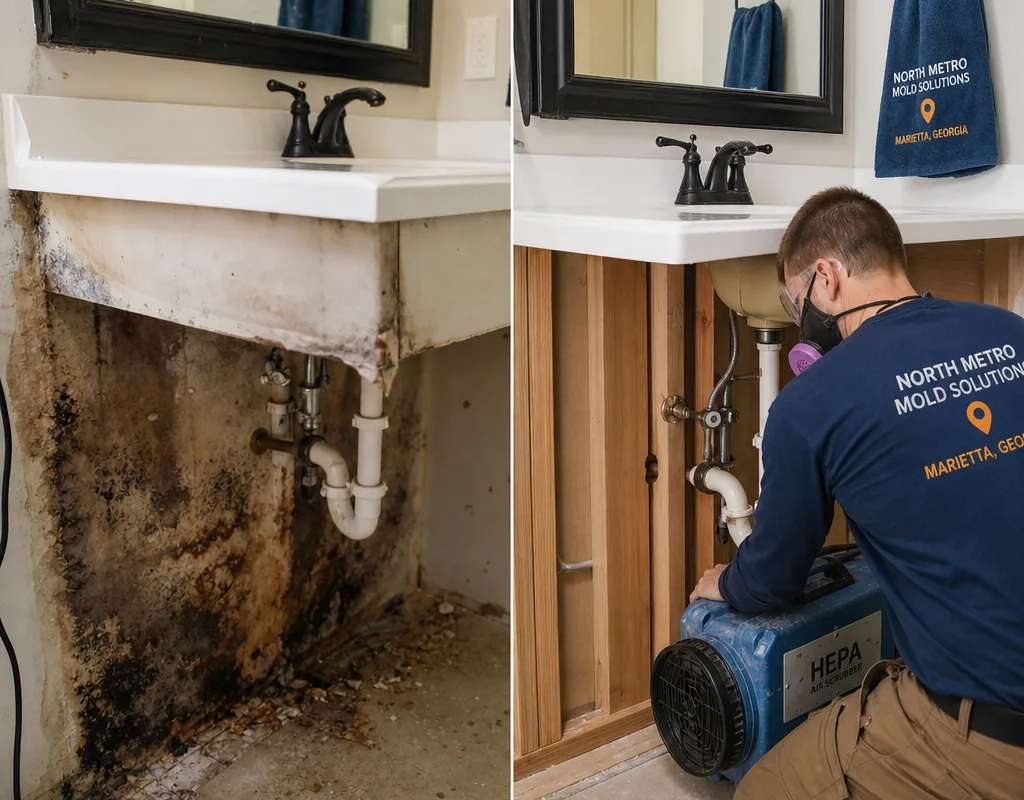
A written scope tied to what we can verify
You will know what areas are included, what materials are expected to be removed, and how containment and cleaning will be handled before work starts.
Serving Marietta, Georgia & surrounding areas
Mold remediation · Marietta, GA
Stop the spread, clean the air, and get a documented plan for safe removal. North Metro Mold Solutions handles inspection, containment, cleanup, and post-remediation verification guidance for homes and businesses.
Source-first cleanup
If you are searching for mold remediation Marietta GA homeowners actually rely on, you are usually dealing with one of two things: visible growth after a leak, or a musty odor that will not go away. Either way, real remediation is more than wiping surfaces. It is a controlled process that removes contaminated material when needed, captures spores with HEPA filtration, and addresses the moisture conditions that allowed growth in the first place.
Marietta's warm, humid weather means moisture can linger in wall cavities and crawl spaces after plumbing leaks, roof issues, or HVAC condensation. In many neighborhoods with mixed housing ages, we also see hidden mold behind baseboards, under carpet tack strips, inside cabinets, and around poorly ventilated bathrooms and laundry rooms. Our job is to find the extent of impact, isolate the work area, clean or remove affected materials safely, and leave you with clear next steps so the problem does not come right back.
North Metro Mold Solutions provides mold remediation in Marietta for residential and light commercial properties, with straightforward communication and documentation you can use for property managers, real estate transactions, or insurance claims.
Professional remediation scope
Mold remediation is a set of work practices used to remove mold contamination and prevent cross-contamination during cleanup. A proper scope depends on where growth is, what materials are impacted, and how air moves through the building.
Typical mold remediation work includes:
What it does not include by default is rebuilding. If drywall or flooring has to come out, we can coordinate the handoff so you can restore the space after remediation. Many clients also start by confirming whether the issue is mold or another odor source; understanding the difference between cleanup and removal helps clarify how scopes are commonly written.
Controlled and documented
You will know what areas are included, what materials are expected to be removed, and how containment and cleaning will be handled before work starts.
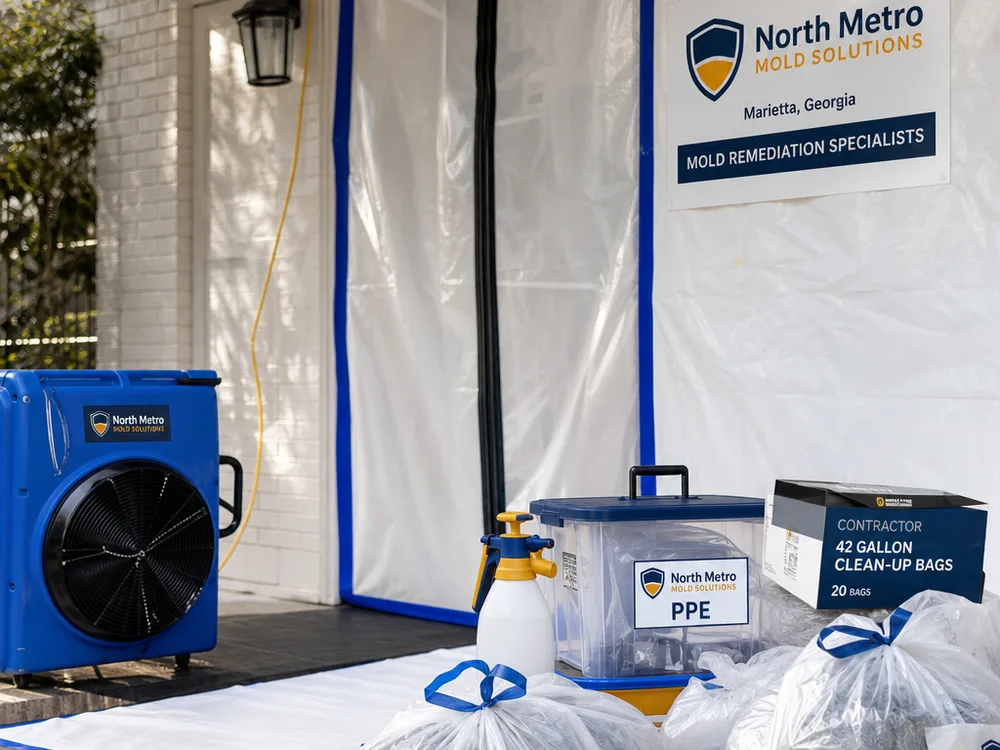
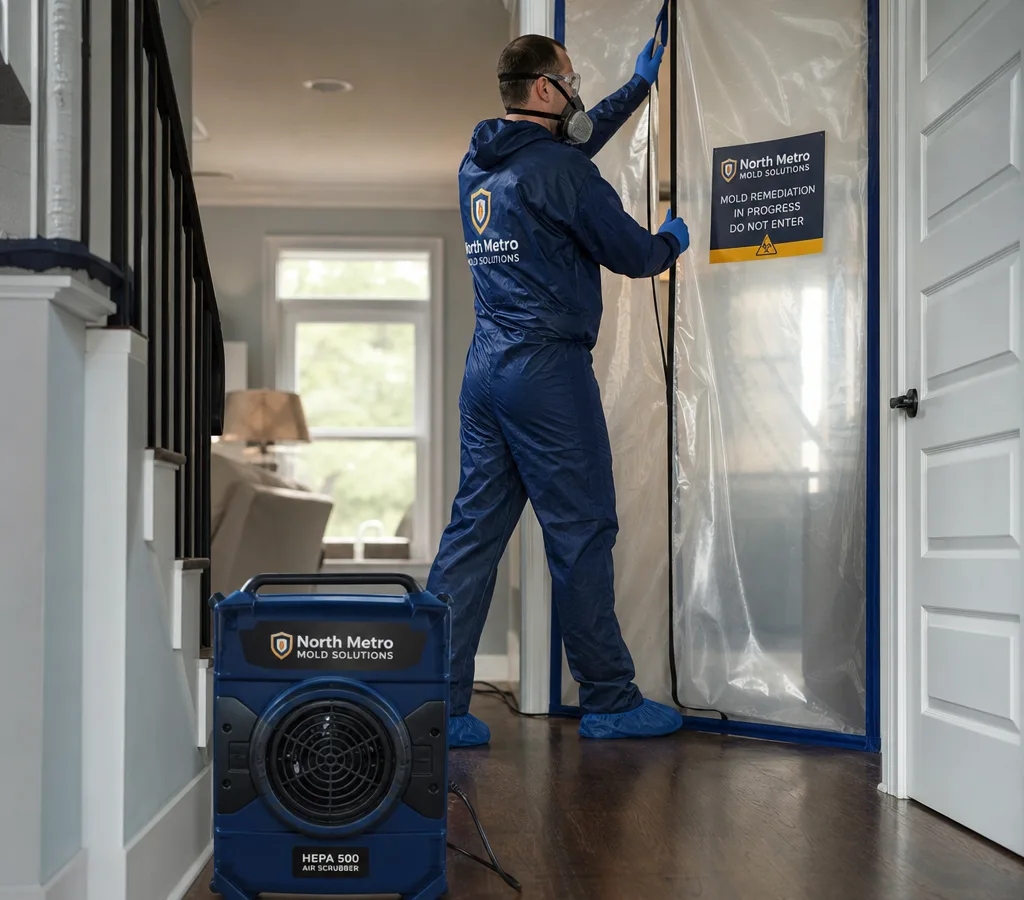
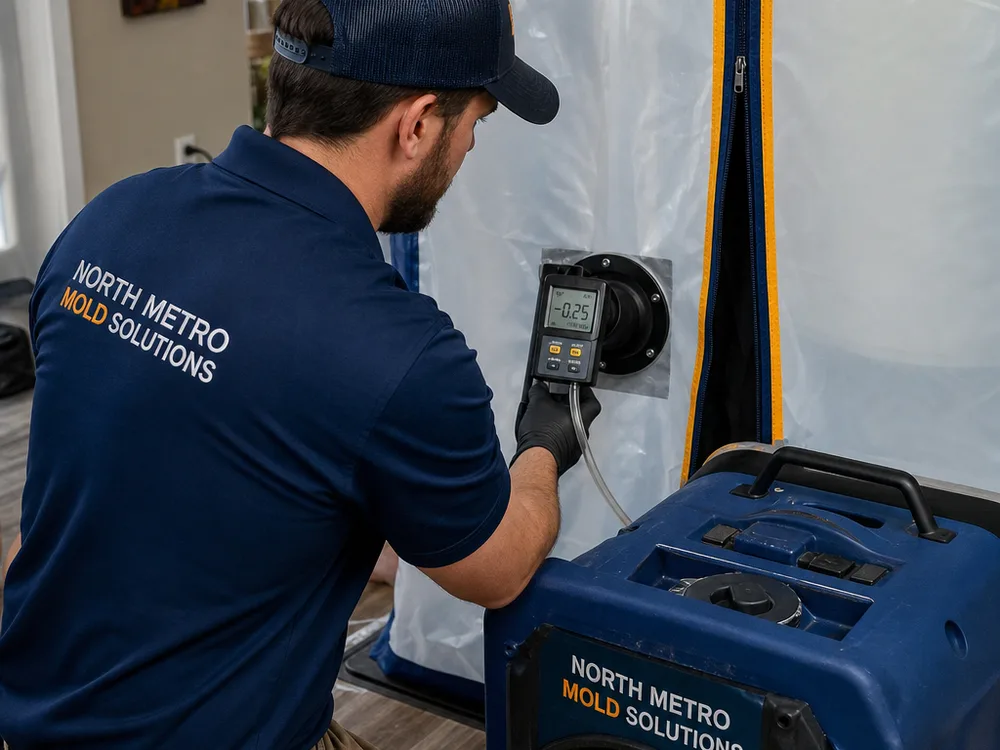
We isolate the affected area and run negative air with HEPA filtration to reduce the chance of spores traveling through hallways, returns, and open doorways.
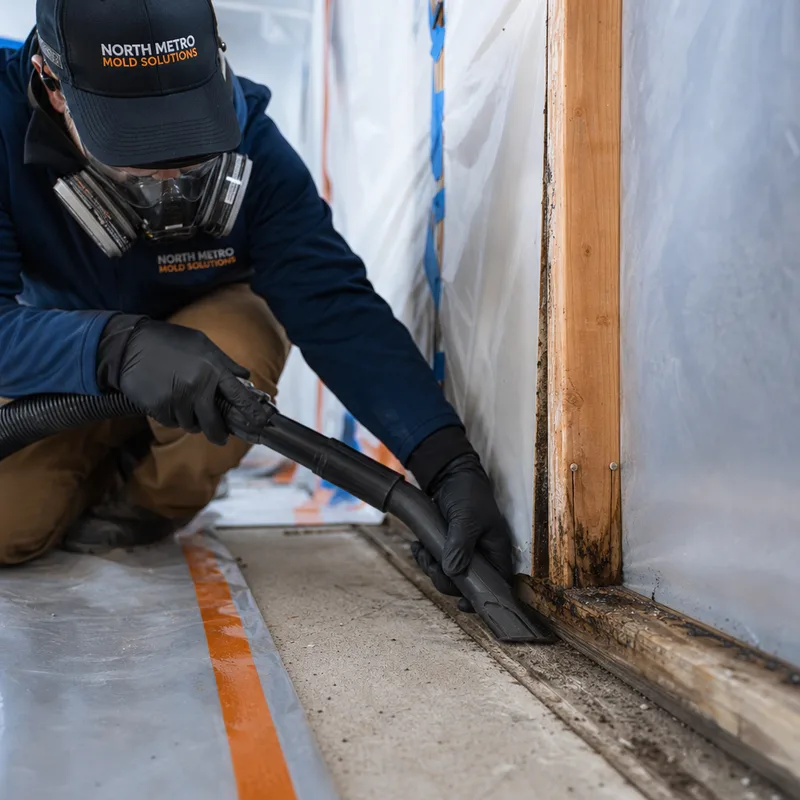
HEPA vacuums and air scrubbers are standard for remediation. They capture fine particles that ordinary shop vacs and fans can spread.
Non-porous and semi-porous surfaces may be cleaned; porous materials are often removed when growth is present. We explain why, item by item.
We point out likely moisture pathways—plumbing, roof, HVAC condensation, or drainage—and what to correct so the remediation work lasts.
Photos and job notes can be provided so a buyer, tenant, adjuster, or contractor can understand what was done and what remains to be rebuilt.
A controlled sequence
Each stage limits spread, removes impacted material appropriately, and connects the cleanup to moisture correction.
01
We start by identifying where moisture is coming from and how far contamination likely extends. If there is visible growth, staining, or strong odor, we map the work area and note adjacent risk zones like wall cavities, closet backs, and shared ceilings.
02
We set up barriers, protect pathways, and establish negative pressure with HEPA filtration. This step matters most in occupied homes, multi-room layouts, and properties with central HVAC returns near the affected space.
03
Impacted porous materials are removed when needed. Remaining surfaces are HEPA vacuumed and cleaned using methods appropriate for framing, masonry, or finished surfaces. We avoid practices that aerosolize spores.
04
We verify that the area is drying and discuss what needs to be repaired or adjusted, including leak fixes, ventilation, dehumidification, or drainage. If the moisture source is active, remediation will not hold.
05
We walk the area with you, review photos and notes, and outline what should be confirmed before rebuild. If third-party clearance testing is requested, we coordinate timing so sampling happens after cleaning and drying.
On-site pricing
Most mold remediation in Marietta typically ranges from about $1,500 to $6,500, with small, contained areas sometimes closer to $800 to $2,000 and larger multi-room or crawl space projects running $7,500+ depending on removal needs.
Final cost changes with the size of the affected area, how much porous material must be removed, access such as an attic or crawl space, whether negative air and multiple containments are required, and how wet the materials are. The exact scope and price are confirmed after an on-site inspection so the plan matches what is actually present.
Answers before work begins
Most mold remediation jobs take 1 to 3 days of active work, then additional drying time if materials were wet. Small, well-contained areas may be completed in a day, while crawl spaces, multiple rooms, or projects that need extensive drywall removal can take longer. Timeline depends on how quickly the moisture source is stopped and how well the area dries.
You can often stay home if the work area is fully contained and there is a safe path around it, but sensitive occupants may choose to be away. Negative air containment and HEPA filtration reduce cross-contamination risk, yet every home layout is different, especially with central HVAC returns near the affected room. We will tell you what we recommend based on the scope and who lives in the home.
If mold is on the back of drywall or inside insulation, drywall removal is usually the correct way to physically remove contamination. Surface cleaning through small holes rarely addresses porous materials and can leave hidden growth behind. During inspection we explain what we can verify and what access is needed to do the work correctly.
Air sampling can help confirm conditions, but it does not replace a visual and moisture-based assessment. Results can vary with HVAC runtime, open windows, and recent cleaning. In many Marietta homes, the deciding factor is visible growth and moisture damage around leaks, bathrooms, basements, or crawl spaces, which is why the inspection and scope matter most.
Sometimes, but it depends on what caused the moisture problem and what your policy covers. Sudden events like an accidental plumbing failure are more likely to be considered than long-term seepage or humidity. We can provide photos and written notes that help support your documentation, but coverage decisions come from the carrier.
Stop the water source if possible, avoid running fans that blow across the affected area, and keep doors to the room closed when practical. If the mold is near an HVAC return or supply, do not run the system on high if it is pulling air from the area. We will give you simple prep instructions after scheduling so access is clear and the work can start promptly.
Tell us what you are seeing—odor, visible growth, a past leak, or recent water damage—and we will schedule an inspection in Marietta. You will get a written scope with containment and cleanup steps, plus guidance on what must be fixed so the problem stays solved.